Friday, July 18, 2014

Your Gift in Action - Real Impact in Israel

Israelis have lived under the constant threat of rocket attack for years, and Federation funding has always been crucial in ensuring the continuation of life-saving services. Now is no exception. Our partners in Israel are currently helping Israeli children and teens escape heavily bombarded areas to reach safer parts of the country; providing critical social services and support for the most vulnerable, such as the elderly, the disabled, and new immigrants; repairing and rebuilding critical infrastructure destroyed by rockets; and expanding much needed trauma services to an increasing number of Israelis in distress.


Israelis have 15 seconds to reach safety. What happens to those who cannot?


JDC’s Center for Independent Living in Be’er Sheva serves people with disabilities throughout southern Israel. We recently heard the heartbreaking story of a man forced to relocate indefinitely into his concrete safe room. Because of his disability, he can’t leave the inhospitable 8 x 8' shelter even to use the bathroom. If a siren were to sound while he were out, he would not make it back in time. Thanks to JDC and the specialized facilities they’ve provided him, David is maintaining his independence and dignity throughout the long days and nights he spends in the bomb shelter.


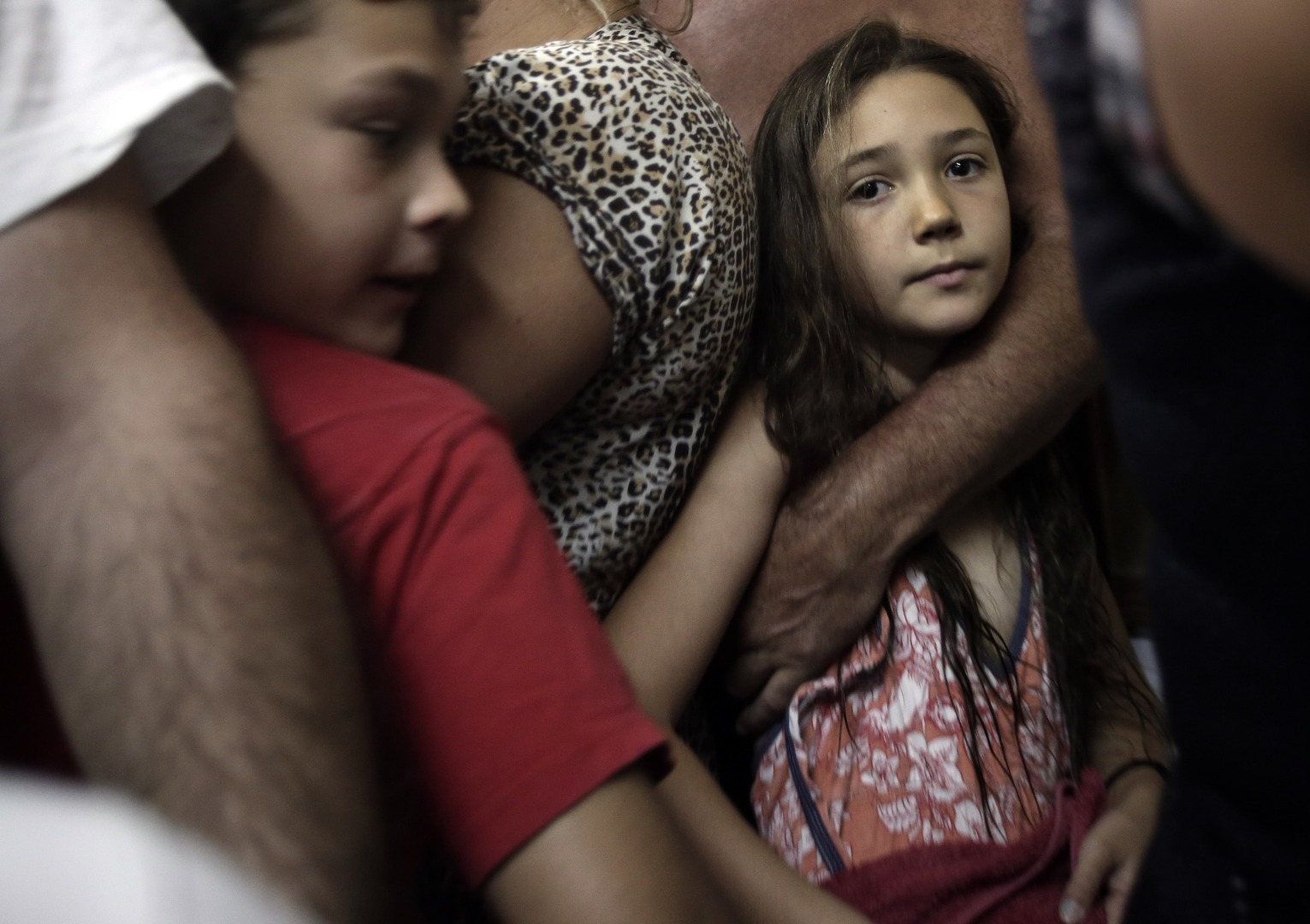
The children of southern Israel are also forced stay in safe rooms, a harrowing and potentially traumatic experience.


Our partners are distributing activity kits for these kids, as well as providing therapy and comfort to assuage their fears.

Located nine miles from the Gaza strip, the Barzilai Medical Center in Ashkelon is the primary facility serving the wounded in the south – Israelis and Gazans alike. Hospital director Dr. Hezi Levy told us that the neonatal unit and the emergency room have been relocated to reinforced shelters on the premises. Despite its proximity to the zone of fire, the medical center is still not completely fortified. Fortunately, this will soon change, as the hospital is undergoing renovations to make the entire facility secure, even in times of conflict, thanks in part to donors like you!


Federation-supported senior centers provide food and medicine to the thousands of poverty-stricken elderly. Today, it’s too dangerous for them to travel.  


For new Israeli immigrants, language barriers and sudden and drastic cultural changes make surviving the constant barrage of rocket fire all the more traumatic. Our partners are deploying a host of caseworkers to mitigate their fears and concerns.

The Federation-sponsored “Fund for Victims of Terror” responds to Israelis within minutes of an attack, providing money for clothes, shelter, and other critical needs. One 34-year-old father of two told us that he was able to continue taking care of his family thanks directly to support from this fund – thanks to your generosity.


THANK YOU FOR ALL THAT YOU DO. TOGETHER, WE DO EXTRAORDINARY THINGS.

Local Mensch Jacob Gardenswartz Wins National 2014 Diller Teen Tikkun Olam Award

On behalf of Federation a huge MAZEL TOV to Jacob Gardenswartz winning this prestigious Award for his great idea Theater of Peace! 


Sitting through a fairly typical school lecture about the ills of bullying, Jacob Gardenswartz was inspired to find a more captivating way to get teens to empathize with their peers. Drawing from his passion for theater, Jacob collaborated to create Theater Of Peace (TOP), a teen theatre troupe that blends anti-bullying and pro-peace messaging with the dynamic energy of live performances, bringing a new twist to anti-bullying programming at schools across San Diego. The troupe develops short skits and interactive lessons that teach children how to become “upstanders” not “bystanders”. By encouraging the audience to share their solutions on how to best combat bullying and providing schools with post-performance curricula, TOP turns listeners into participants and ensures that the conversations continue long after the curtain call. This unique approach has successfully rallied 4,000 students around Jacob’s cause and raised nearly $10,000. Jacob is currently working with several businesses to implement his program as part of their sexual harassment and workplace violence training.


Day 11 Update: Not Just Another Friday Morning

Today's Update from Rebecca Caspi, on the ground in Israel


Day 11 Update: Not Just Another Friday Morning
July 18, 2014

Dear Friends,


This morning, I looked at my neighborhood with completely new eyes. I live in Motza Illit, a quiet rural spot just outside of Jerusalem off the main highway to Tel Aviv. It’s a pretty sleepy place. But when I got in my car to pick up groceries and buy a chicken for Shabbat, I looked right past the gorgeous Judean Hills to identify potential spots to pull over and take shelter.


Instead of enjoying a few minutes of quiet reflection in the car, I tuned in to “Reshet Bet,” one of the two radio stations broadcasting red alerts in real time, in case I couldn’t hear the nearest sirens. Just last night, more than 50 rockets had been fired on Israel, bringing the total to more than 1,400 over 11 days.


Thankfully, nothing happened on my drive and I got a great spot right by the supermarket—probably because fewer people than usual were out. As I steered my grocery cart into the fruit and vegetable aisle, I heard two people shout in unison, “Sderot!” and then seconds later, “Ashkelon!” By the cash registers, others were broadcasting the latest targets of rocket fire. They too, like so many of us here, are addicted to the Tzeva Adom (red alert) smartphone app. 

After I knew where I could find shelter in the supermarket, I started shopping. While I’m usually pretty picky about produce, today just didn’t seem like the time to be so selective. A few bad apples may actually have made it home with me.


Israelis are known for our commitment to normalcy, even in the most trying situations. When a long spate of suicide bus bombings wreaked havoc around the country, non-Israelis were struck by how quickly those scenes of destruction were restored. When restaurants became the targets, security guards immediately appeared at dining places throughout the country with little fanfare.


The fight against terror was woven seamlessly into our days. We didn’t stop. We simply adjusted the rhythm of our daily lives.

Today, the fact that we all have a new app on our phones, that we check the exit signs when we walk into a store or bank, that we don’t wear headphones when we’re out jogging because we don’t want to miss the sirens, are among the hundreds of changes, big and small, to our lives.

Indeed, we live differently than we did two weeks ago—differently than nearly everyone throughout the Western world.

I am fortunate in so many ways. In our small country I am “far” from Gaza—around 50 miles. But the hundreds of thousands of people in the south whose mornings have been repeatedly disrupted by rocket fire—not just these past 11 days but on and off for 13 years—aren’t taking that same short journey to the store. The red alert app on their phone is not a precaution—it is a lifeline. Their kids play in indoor “safe space” parks. Bus stops double as shelters.

It is hard to explain to those who don’t live here. But those who visit during times like these are deeply affected by it. I spent the last few days with a group of Federation leaders who traveled here on a solidarity mission. These men and women have been to Israel countless times, during periods of peace and during waves of terror. Yet even they were changed by the experience. As Deborah Corber, CEO of the Montreal Federation shared, “I slept semi-clothed, room key already in the pocket of my pants and iPhone by my side, just in case I needed to make my way to the shelter during the night. I learned how to case out my surroundings constantly. I learned how to jump out of a vehicle and hit the ground in under 15 seconds. And I learned that Israel still needs its historic partners--Jewish communities and Federations all over the world.”

Our team is hard at work preparing to welcome another amazing group of North American Jewish leaders coming on our second solidarity mission early next week. As an Israeli, I can tell you that this demonstration of unity, of Am Yisrael, from our brothers and sisters around the world is so important. I am proud to be part of an organization—really an ecosystem of Federations and partner agencies—that for generations has supported Israel in so many ways. We have been here through every war and crisis and the aftermath, providing physical, psychological and humanitarian relief. 


As a result, we have an unparalleled infrastructure to deliver critical services directly to those who urgently need them. But its capacity is being stretched, as the needs in the south of Israel grow and the threat reaches far beyond Sderot and Ashkelon.


That is why what we do is so important–why Federations’ contributions to the core funding of our partner agencies is vital, and why the current emergency campaign is essential. If history is any guide, half of the philanthropic contributions to support Israel during this time of crisis will come from Federation. That is the strength of our community and the power of our collective.

I know we are up to the challenge. And I look forward to the day when the only sirens I hear across Jerusalem on Fridays announce the start of Shabbat—and of peace.

Shabbat Shalom,

Director General, Israel Office
Senior Vice President of Israel and Overseas
The Jewish Federations of North America

Thursday, July 17, 2014

An Op-Ed from Rabbi Gaubart on Gaza

The siren blared - an eerie, other-worldly sound. I'd just returned from a celebratory birthday dinner to my vacation apartment. I was a little tipsy. I didn't have the slightest idea what to do, so I did the logical thing: I ran out into the street (I don't recommend this). I saw the white streak, heard a boom, then another. For me, the sound and smell were indistinguishable from 4th of July fireworks, but even after two glasses of wine, I knew the difference; this was a missile, coming to kill me and others, intercepted on its way by the Israeli military.

I returned to my apartment and turned on the TV. The newscast was playing an official video from Hamas. "Better find more coffins, O Jews," the singer exclaimed over scenes of rockets hitting targets in urban areas. "There will be a shortage of coffins in Israel tonight!" Later that evening, I found the same boasting words in Hamas' twitter feed. Better find more coffins.

On the one hand, there was and is something buffoonish, almost cartoonish about the Hamas boast. As of this writing, Israel has needed precisely one coffin, despite the thousand missiles Hamas has launched, despite the several terrorist incursions, despite Hamas' best efforts. Tragically, it's Gaza itself that has needed the extra coffins, and this despite Israel's best efforts to avoid civilian casualties.

On the other hand, we'd be foolish to dismiss the Hamas boast - simply because it clarifies the difference between Israel and Hamas. It's impossible to imagine even the most right wing Israeli prime minister bragging about his intention to inflict civilian casualties. On the contrary, Israel makes phone calls, distributes leaflets, broadcasts warning after warning, "knocks on the door" with harmless explosives - all in an effort to remove Palestinian civilians from the warzone. Hamas openly admits its aims - civilian deaths on both sides. It urges its civilians not to flee, even while it targets Israel's largest population centers. In other words, there's a difference. And the difference matters.

I'm a liberal Zionist. My apologies for interjecting this auto-biographical note, but the conflict has become so tribal, that we don't trust anyone's opinion unless we know where they stand politically. So here's where I stand. I (along with most, but not all American Jews, and most but not all Israelis) support a fair two-state solution: an Israeli withdrawal to something close to the 1967 lines. I support the full dignity of the Palestinians, including their right to a state of their own. And it's precisely these political/humanist views which compel me to support a decisive victory against Hamas, in Gaza.

Hamas' published, publicized political program is antithetical to the values of the two-state solution. Hamas aims for the creation of one Islamic state, a totalitarian, non-democratic state that privileges Islamists, a state that by law will oppress women, gay/lesbians, Christians, and Jews. It's a fanatical goal, one that, naturally, uses fanatical methods to bring it about - terrorism, the murder of innocent civilians. The Palestinian Authority, in contrast, gave up on terrorism as soon as they moderated their political ambitions. But Hamas clings to violence, and is proud of how it refuses to compromise.

It's disappointing and frustrating to come home from Israel and encounter the simplistic David vs. Goliath narrative - Israel the oppressor verses the powerless Hamas. Yes, Israel is more powerful, so its casualties are fewer. But Hamas started the latest round, and Israel continues to offer quiet for quiet, an offer Hamas, boiling in its fanaticism, continues to refuse.

Just today, I read in the New York Times that the Hamas leadership is "desperate to relieve the economic difficulties of its 1.7 million citizens." Really? If Hamas' political program were relieving the economic difficulties of its citizens, there's a simple solution: stop firing rockets, and disarm, so both Egypt and Israel can lift the blockade. Why do they imagine there's a blockade in the first place? Hamas has many clear (and published) aims, but relieving the economic stress of the average Gazan is not one of them.

In fact the only way for Hamas to pursue genuine economic growth, and therefore genuine state-building, would be for it to stop being Hamas. One day, that might happen. Until then, all Israel can do is resist this ongoing war against its existence. And everyone who hopes for two states - anyone who dreams of peace for both Israel and Palestine - should pray for victory.

Day 10: Update on Operation Protective Edge and Federation Response


Day 10: Update on Operation Protective Edge and Federation Response
July 17, 2014
As Operation Protective Edge continues, our partner agencies are working at full capacity to help mitigate the effects of ongoing rocket fire on a weary but resilient Israeli population. Today, Alan Hoffmann, director general of The Jewish Agency for Israel, shares with us his reflections on their vital work. 

Tomorrow, Rebecca Caspi, executive director of JFNA’s Israel office and senior vice president of Israel and overseas, will share her report.

From Alan Hoffmann, Director General

The Jewish Agency for Israel
Today we enter the tenth day of Operation Protective Edge, a day that began with the announcement of a five-hour humanitarian ceasefire. Like all of us in Israel, I hope that we will soon return to a true sense of quiet and security.

In the nearly five decades that have passed since I first arrived in Israel from South Africa, the People and State of Israel have endured ongoing threats and hostilities. I have never ceased to be impressed by the resiliency of this society in the face of conflict, and by the deep expressions of solidarity and support that the global Jewish community provides to Israel, particularly at times of anxiety and need. I have felt that same sense of profound admiration and appreciation very strongly in the last two weeks, during the current operation to cease the rocket fire from the Gaza Strip.
So much of the work that The Jewish Agency for Israel does, on behalf of JFNA and Federations across North America, is focused on those geographic areas and sectors of society that are most directly impacted by the constant threat of rocket fire.

It is here—in the absorption centers for 3,000 new immigrants in the south of Israel and throughout the country; in the respite activities we have offered for 20,000 children so far in the areas within the 40-kilometer (25-mile) radius from the Gaza border; in our support for those who are directly affected physically, emotionally and financially by rocket fire and other acts of terror; in our ongoing work to strengthen our Partnership2Gether communities within the 40-kilometer area; in the civil defense facilities we supply for the residents of Amigour housing in Sderot—that I see most clearly the amazing spirit of the people of Israel and the truly significant ways in which we together, JFNA and The Jewish Agency, provide real assistance, solace and a sense of hope.

This touched me most poignantly in my visit to the Ye'elim Absorption Center for new immigrants in Beer Sheva. It was equally evident at the Shefayim Water Park, where 1,500 children were given the opportunity to escape the constant threat of rocket fire and its debilitating psychological impact.
Just yesterday, in the midst of this ongoing conflict, The Jewish Agency helped welcome 400 new immigrants from France, each of them inspired by the hope for a better life in Israel. These immigrants come with full knowledge of the situation here, and with the strength and conviction that together, Israel and the Jewish People can overcome this threat, as we have so many others.

In addition, our Israel experience professionals, through Masa Israel Journey, Israel Experience® and Onward Israel, are providing daily for the safety and security of the thousands of young people who have come here this summer to strengthen their Jewish identity and engage with Israel through peer-based experiential and educational programs. I am inspired by their sense of connection, involvement and resiliency as well. These young people are yet another expression of the unbreakable bond which joins all of us as a People, which is felt so clearly through the work that we do together here in Israel.
   

Wednesday, July 16, 2014

15 Seconds: An Op-Ed by Michael Sonduck

Hamas’ disappointing decision to reject the Egyptian-brokered ceasefire with Israel that was broadly supported by key stakeholders, including the Palestinian Authority, the Mideast Quartet, the Arab League, and the United States, not only continues to place both Israeli and Palestinian lives in danger, but also ignores the wishes of the very people it claims to represent.

As reported by the Washington Institute for Near East Policy, a credible poll conducted last month throughout Gaza by a highly-respected Palestinian pollster found that 70 percent of respondents were “heavily in favor of a ceasefire”, and largely oppose Hamas’ policies and leaders.


In the past nine days, Hamas has fired more than 1,100 rockets into Israel, putting the lives of six million Israelis — 70 percent of the country’s population — at risk, as well as the lives of its own civilian population. Try to imagine 70 percent of our country — 250 million Americans — under the unceasing threat of rocket fire. Envision dinners interrupted, wedding ceremonies halted, and fearful children jolted awake in the middle of the night as families scramble to find shelter. Once the sirens are sounded, Israelis have just 15 seconds to reach safety. That’s barely enough time to read this paragraph. By the time you finish reading this article, sirens will likely have been sounded in yet another Israeli town.

Since Israel’s withdrawal from the Gaza Strip in 2005, more than 13,000 rockets have been fired at Israeli towns and cities. And while Israel’s Iron Dome anti-missile system, developed with the assistance of the United States, has a 90 percent success rate in intercepting the rockets, it cannot destroy every rocket.  Israeli’s homes, gas stations, factories and schools are all at risk. The rockets have caused damage and fires that threaten more lives. This utterly abnormal reality has become the norm for millions of Israelis - Jewish, Muslim, and Christian alike. The threat to life is real and unacceptable.

We profoundly regret the injuries and loss of life suffered on both sides.  All lives are precious; all mothers and fathers mourn; and all in nations, people grieve. But while the Israel Defense Forces seek to minimize casualties by repeatedly delivering warnings to civilians in Gaza to vacate targeted areas and using pinpoint technologies to hit only identified infrastructures, Hamas victimizes Palestinians, calling on citizens to ignore these warnings, and continue to use the people of Gaza as human shields.

Even the Palestinian delegate to the United Nations Human Rights Council, Ibrahim Khreisheh, told a Palestinian Authority TV outlet that Hamas “rockets aimed at Israeli civilians are crimes against humanity - every rocket, individually, whether or not it hits anybody.” He further elaborated that because Palestinians in Gaza receive warnings from Israel before an airstrike - a safeguard not observed by Hamas to Israeli - any resulting fatalities are accidental and not criminal.

Hamas is an internationally recognized terror organization whose charter calls for the murder of all Jews. Hamas is not a partner for peace. In fact, its leadership lauded the kidnapping and murder of three innocent Israeli teens last month by calling for further kidnappings. Despite having signed a unity agreement with the Palestinian Authority, which was working to negotiate peace with Israel, Hamas does not seek a peaceful two-state resolution to the conflict, and even refuses to accept Israel’s right to exist as the democratic nation-state of the Jewish people.

Its leaders instead choose terrorism and hail their terrorists as heroes. They smuggle in thousands of rockets from Iran and deliberately place their own citizens, schools, mosques, and hospitals at risk by storing weapons in those civilian facilities, while using innocent Palestinians as human shields.

For Hamas, portraying Israel as the aggressor and targeting Israelis is more important than protecting its own citizens. Yet, inexplicably, some still question Israel’s decision to exercise self-defense and protect its population.

We hope the tumult will end and are praying for peace. We implore the global community to follow the lead of the United States in recognizing Israel’s right to self-defense and to stand in opposition to terror.

Israel has an inalienable right and obligation to defend its citizens from attack. “No country on Earth would remain passive in the face of hundreds of rockets fired on its cities,” said Israeli Prime Minister Benjamin Netanyahu, “and Israel is no exception.”

Nor should anyone expect it to be.

Day 9: Update on Operation Protective Edge and Federation Response

Update from JFNA President and CEO Jerry Silverman in Israel

Day 9: Update on Operation Protective Edge and Federation Response
July 16, 2014
Dear Colleagues,
As I send this email, I am waiting to board a plane to the U.S. at Ben Gurion Airport. Our solidarity mission has ended and we’re about to return to our lives back home. While our phones will still ring from the IDF’s Red Alert rocket hit app, we won’t have to scramble for shelter.

Millions of Israelis will, though. They are still living it. 

They’re still taking cover in stairwells and safe rooms. Parents are still comforting crying children during sleepless nights in shelters. The sirens are still sounding.

Indeed, the crisis is not over. For Israelis. Or for us.  

So you will continue to receive messages from “my desk,” but I will just be a messenger to convey to you the real voices of the people of Israel, the people living the situation on the ground. We are collecting their stories so you can hear directly from them.
We have also invited our partner agencies, who really have been your proxies in bringing aid to the people of Israel, to share their reflections from the field. Today, Alan Gil, the CEO of JDC, imparts his thoughts. In the next few days, we will share with you thoughts from our many partners.
May our strength as Am Yisrael continue to guide our work.

Jerry

Going to work has become a traumatic experience for Yuli Gus, an expecting mother with a three-year-old son living in Tel Aviv. Every time a siren blares, she is overcome with panic, consumed by thoughts of her son running for shelter while rockets fly overhead. Did he make it to the safe room in time? Is he okay? Should I call again to make sure? She can’t get through a single work day without worrying about his safety.

Beth Steinberg and Ira Skop have had to create several plans to help Akiva, their son with Down Syndrome, deal with the ongoing barrage of rockets and subsequent sirens. Though they live just seconds from their safe room, they fear his developmental problems will not allow him to make it in time. If Akiva is too traumatized by the noise to move quickly enough, Beth and Ira have decided to throw their bodies over him and shelter him from rocket fire.

From Alan Gil, Chief Executive Officer
American Jewish Joint Distribution Committee

It's hard for any of us to imagine what it is like to live under constant threat of missile attack, fear permeating your being, wondering what will happen next.

Now imagine if you were a frail or bedridden 80-year-old, a person with a physical disability or a petrified child tackling challenges every day, including the loss of a parent or poverty. Now add the sirens. Add the missiles. Think of the loneliness. And keep in mind that 60-second window to find safety and solace.

Now you understand the situation for tens of thousands of Israelis in the south—and throughout the country—who face this crisis, the unimaginable, with growing needs and circumstances that require a response imbued with humanity and carried out with expert care.

Thanks to the passionate support and leadership of JFNA and the Jewish Federation system, there is a broad and deep JDC network in Israel of hundreds of emergency teams, social workers, teen volunteers and trained professionals who are reaching 10,000 elderly and people with disabilities to ensure their basic needs, including human contact; bringing smiles to the faces of nearly 20,000 children through bomb shelter recreational activities; offering a day of critically needed respite to busloads of vulnerable Israelis from heavily bombarded areas; creating a WhatsApp peer-to-peer message group among worried mothers that is ensuring they have neighbors to turn to when sirens blare; and working on a number of innovative and widely deployed online platforms that reach these Israelis in their homes and on their phones at their greatest time of need.

Today in Israel, as whenever there is a crisis in the Jewish world, we are putting into action that we are all responsible for one another. In the last week, tens of thousands of Israeli seniors, children and youth, and people with disabilities turned to the JDC facilities and staff who support them during the best of times, and were given the intimate assurance that someone was there for them at the worst of times. That someone was there because of the global Jewish community—because of you.

THE JEWISH AGENCY FOR ISRAEL

-- As The Jewish Agency continues its emergency efforts, some 400 new immigrants from France are arriving in Israel today. Undeterred by the security situation, most of the new arrivals are families, including 195 minors and 18 babies, brought on two special flights organized by The Jewish Agency and the Ministry of Aliyah and Immigrant Absorption. 

-- 2014 has seen a dramatic increase in aliyah from France, and more than 5,000 French Jews are expected to immigrate to Israel by the end of the year. 3,289 French Jews immigrated to Israel in 2013, compared to 1,917 in 2012—a 60% increase. Chairman of the Executive of The Jewish Agency for Israel Natan Sharansky said, "Despite the rocket onslaught against the people of Israel, not one immigrant from France has canceled his or her arrival."

THE ISRAEL TRAUMA COALITION

-- Roni Lior, the Israel Trauma Coalition’s project coordinator for Sderot and the Gaza region, pointed out that Gaza border communities have suffered 14 years of constant exposure to Kassams and other deadly rockets. 

-- “In these communities, every child under the age of 14 has spent all of his life like this,” Lior said. “The effects vary, from avoidance of specific activities—like refusing to walk to school along a route where a rocket once fell—to intrusive thoughts where you feel like you’re re-experiencing the traumatic event, and hypervigilance, where everything makes you jump.”

-- ITC’s Natal has a mobile unit operating in Ofakim, Sderot and Netivot, providing individual and group therapy, while home psychological treatment for elderly Holocaust survivors is provided by ITC’s Amcha. The Selah Crisis Management Center is in constant contact with its immigrant clientele, providing house visits and telephone consultations where needed.

-- Many parents from both Gaza border areas and the Tel Aviv-Gush Dan region have been calling hotlines to seek help with children crying, vomiting, shaking uncontrollably, wetting the bed or suffering stomach pains. In response, ITC developed an informational pamphlet for parents in English and Hebrew. The RADAR Center/Negev Project Vision at Ben-Gurion University of the Negev also published “psychological first aid” guides for parents.

-- Over 600 people have been treated for anxiety so far, in contrast to 800 for the entire year of 2013. There has been an alarming increase in professional "burn-out". The dedicated service providers who work around the clock now desperately require respite programs where they can receive self-help and regenerative care.

-- Where the model Resilience Centers—the partnership of ITC, Government and local councils—have invested resources and expertise, the five local council authorities of Sderot, Hof Ashkelon, Sdot Negev, Shaar Hanegev and Eshkol are performing better than areas that had not benefited from professional support and assistance. 

WORLD ORT

-- World ORT sent a solidarity mission to Israel’s south. Mission members had to huddle in a reinforced bus shelter when a red alert caught them on the open road as they neared Sha’ar HaNegev High School. Once at the school, they were able to ignore a second red alert thanks to the reinforced concrete buildings of the new campus, which World ORT helped to build.

-- World ORT Kadima Mada CEO Avi Ganon, who grew up in Beer Sheva, said, “The mayor said we were the first overseas delegation to visit his city and he welcomed our support. It means a lot to local people when they see people have come from Mexico, the USA, the UK to support them—it says something.”

-- The mission today was due to meet the more than 200 people bussed up to the Kiryat Yam region by World ORT for respite from the bombardment of their southern communities.

-- “Beer Sheva is home to World ORT’s second largest investment in Israel’s education system,” said World ORT Treasurer Shelley Fagel. 

MASORTI (CONSERVATIVE) MOVEMENT

-- Due to the security situation, Ramah-NOAM summer camp, scheduled to begin July 13 in the Ben Shemen Forest, will not be able to take place at this location as per the Central Command. The movement is now planning on hosting the camp at a new location, Ramat HaGolan, in the north.

-- Respite activities for children and adults will be operated by the NOAM Garin, coordinators and senior staff in bomb shelters and at some of the Masorti communities in more secure locations. This project will include transportation, equipment and recreational activities that will be located at NOAM branches throughout the country used in times of emergency.

-- The Counseling Program will provide emotional and spiritual counseling for people suffering from stress and anxiety due to daily rocket fire, terror attacks or other emergencies. 

REFORM MOVEMENT (Israel Movement for Progressive Judaism)

-- Emergency activity packages are being provided for families in need and at Home Day Camps, filled with toys, activity modules and other supplies. 

THE SITUATION

-- After the Israeli government accepted the Egyptian-brokered ceasefire agreement Tuesday, Hamas rejected the reported text, saying, "Our battle with the enemy continues and will increase in ferocity and intensity." Hamas called it an initiative of "bowing and submission," adding, "It was not worth the ink it was written with. "

-- During a six-hour Israeli ceasefire, Hamas fired over 80 rockets into the country from Gaza. Hamas spokesman Sami Abu Zuhri said, "The retaliations of the resistance will continue until we achieve all the demands of our people, and any unilateral Israeli ceasefire would be worthless."

-- Israel has agreed to a five-hour humanitarian ceasefire from 10 a.m. to 3 p.m. on Thursday to allow Gazans to resupply for their humanitarian needs. An Israeli delegation is en route to Egypt to attempt to formulate another ceasefire agreement.

-- As of this morning, Hamas terrorists have fired 1,248 rockets into Israel since July 8. This is, on average, over 145 rockets every day. 

-- This digital visualization shows the overwhelming number and location of rocket attacks on Israel in the past eight days. The site also flashes in real time when there are rocket attacks.

-- As of 9 a.m. today, the Iron Dome defense system has successfully intercepted over 200 rockets so far, including several over Ashkelon earlier today. The U.S. Congress has backed a measure to double its funding contribution to the system. 

IMPACT

-- Tuesday morning, shrapnel from a rocket hit a home in Kfar Shalem in Tel Aviv, where a woman in her 60s lives alone. The house has no safe room, but fortunately she was not injured. She is being treated for shock. 


-- This graphic maps the scale and range of rocket attacks onto California and the east coast of the U.S. 

-- Finding shelter from rockets is more difficult outside in summer, as seen at this day camp in Tel Aviv and in this photo of children hiding at a playground.

-- Despite the ongoing rocket fire and risk to their lives, Israeli technicians have donned bulletproof vests and special helmets to repair a line that delivers power to 70,000 Gazans. The power line was hit by a Hamas rocket  Sunday. 

-- At 7 p.m. Tuesday night, a school for children with special needs in Rishon LeTzion was struck by debris from an intercepted rocket, destroying parts of the building. 

IDF RESPONSE

-- The IDF struck 39 terrorist hubs in Gaza Tuesday night, bringing the total of targets hit to 1,750. 


-- The IDF continues to warn Gazans in advance of strikes, yet civilian residents of Shija’iya and Zeitoun, and many in Beit Lahiya, are not evacuating their homes. The Wafa Rehabilition Center in Shija’iyah is also reported to be refusing to evacuate. 

-- Israeli troops continue to allow humanitarian aid to enter Gaza from Israel. On Tuesday, 102 trucks entered Gaza from Israel through the Kerem Shalom crossing. 

GOVERNMENT

-- Prime Minister Netanyahu addressed his security council Tuesday night, recapping Israel’s acceptance of the ceasefire, Hamas’ refusal and subsequent actions: "This morning, I convened the Security Cabinet. We decided that Israel would respond positively to Egypt's proposal for a ceasefire. Hamas chose to continue the campaign and it will pay for this decision. Whoever tries to attack the citizens of Israel, Israel will strike at him. When there is no ceasefire, our answer is fire. It would have been preferable to resolve this by diplomacy and we tried to do so when we acceded to the Egyptian ceasefire proposal. But Hamas left us no choice but to broaden and intensify the campaign against it. This is what we will do until we achieve our goal – the restoration of quiet for Israel's citizens while inflicting a significant blow on the terrorist organizations. These are moments in which decisions must be made with equanimity and patience, not in haste. I am determined to do the right thing and I know that you rely on me and on us to ignore the background noise and concentrate on the main task – guarding your security and your lives."

-- Prime Minister Netanyahu addressed German Foreign Minister Steinmeier Tuesday, saying, "I know that you know that no country would sit idly by while its civilian population is subjected to terrorist rocket fire. Israel is no exception… I want to thank the many world leaders, including yourself, who unequivocally condemn Hamas for the rocket fire on Israeli cities and for the clear-cut support for Israel's right to self-defense."

-- Outgoing president Shimon Peres also supports Israel’s right to protect its citizens: “There is a moral problem, but I don’t have a moral answer to it. If they are shooting at us, and don’t let our mothers and their children…have a full night’s sleep, what can we do?”

ADDITIONAL INFORMATION