Dear Jewish Community Foundation Friends,
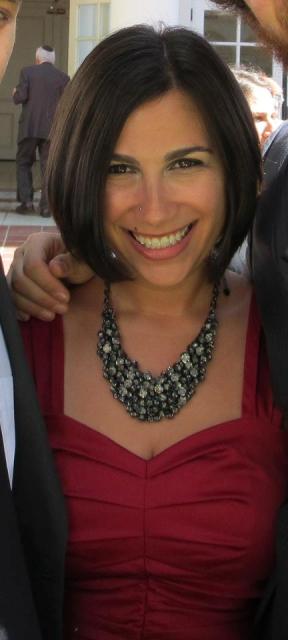
I am very pleased to report that, following a national search, the Board of Directors of the Jewish Community Foundation recently approved the appointment of Charlene Seidle as the President and Chief Executive Officer and holder of the Miriam and Jerome Katzin Presidential Chair effective January 20, 2015.
Charlene is exceptionally qualified to carry on the important work of the Jewish Community Foundation. She reflects the best of our commitment to trust, competence and high quality service to our valued donors and community partners. Currently Executive Vice President at the Leichtag Foundation, Charlene has played a key leadership role in the development and implementation of Leichtag's strategic framework; oversees grantmaking; has designed innovative and creative programs such as the North County Jewish Hub, Jerusalem Matching Grant Initiative, Jewish Food Justice Fellowship and others; and provides overall management and strategy development. Prior to her work at Leichtag, Charlene has worked at the Jewish Community Foundation in various roles since 1997. While still an undergraduate student at UC San Diego, Charlene started her employment at the Jewish Community Foundation and assumed positions with increasing responsibility to ultimately become a Senior Vice President at the Foundation. Most recently, Charlene has held a senior consulting role with the Jewish Community Foundation. Charlene serves on the board of the Jewish Funders Network and received the prestigious J.J. Greenberg Award, an international prize for excellence in the field of philanthropy. She is also highly regarded in the local philanthropic community and has served on the board of the San Diego Grantmakers. Replacing Marjory Kaplan, who has served as the Foundation's chief professional for 20 years, Charlene's tenure will begin January 20, 2015. Marjory has led the Foundation since 1994 and has helped it grow with several innovative programs for the community, most notably the Endowment Leadership Institute and family philanthropy initiatives. During her tenure, the Foundation has come to be regarded as a model of outstanding governance. Marjory will continue in an advisory role after taking a few months off. Charlene was chosen after a search directed by the Foundation's Search Committee led by Barbara Bry with members including Edgar Berner, Emily Einhorn, Joan Jacobs, David Kabakoff, Larry Sherman, Jeff Silberman, Andrew Viterbi and me. I thank Barbara and the committee for their outstanding efforts. I look forward to welcoming Charlene as our new President and CEO. She has demonstrated success in so many areas of philanthropy, has a tremendous track record for innovation, and is the ideal person to lead the Foundation. Please stay tuned for an announcement about how we will celebrate Charlene's appointment and Marjory's retirement. I thank you for your partnership with the Jewish Community Foundation. You may find the full press release here. With warm regards, Jane Scher
Chair, Jewish Community Foundation
|
The Jewish Federation of San Diego County is dedicated to building a vibrant and inclusive local Jewish community, and to enhancing the well being of Jews in San Diego, Israel, and throughout the world.
Thursday, August 14, 2014
Jewish Community Foundation Appoints New President & CEO
Wednesday, August 13, 2014
Sha'ar HaNegev Update from Mayor Alon Schuster
Dear Friends, Brothers, and Sisters
On Tuesday 5 August 2014 at 07:55, five minutes before the ceasefire between Israel and Hamas entered into force, a Katyusha was fired at Kibbutz Kfar Azza - the same kind of 356 missiles that exploded in Sha'ar Hanegev over the previous 29 days.
The house of Yisrael and Orly was hit, and the home of Shir - an IDF soldier - as well as six other houses were damaged by shrapnel and blast.
In Kfar Azza, as in Nahal Oz, Nir Am and other communities, homes were also destroyed as good as public buildings, schools, nursery schools, and infrastructure. In Nahal Oz, a direct missile hit injured Yelena Yakimovsky, a kibbutz resident who was asleep in her room and didn't hear the siren. She was evacuated in a moderate condition to hospital.
On the morning of Friday 8 August, Dr Nachmi Paz, CEO of Sapir College, was injured by splinters from a mortar shell that exploded a few yards from him. Nachmi was on his way from the college to his home in Kfar Azza, when he heard the siren and the Color Red alert. He stopped his car on the side of the road, as we are supposed to do, and his life was saved by a miracle. He will be released from hospital in good condition in the next few days.
Snapshots of the war raging here on the battle-lines facing Gaza are screened on your TVs around the clock. What is not shown is the reality in the kibbutzim which are located over the openings of the terrorist tunnels, that were discovered in their full horror just a few weeks ago.
Fourteen years of rocket and mortar fire, that has been the "birthright" on which an entire generation of kids has been raised, didn't prepare us for this appalling reality. In the depth of the night next to Nir Am, murderous terrorists crawled out of the earth on their way to attack soldiers or civilians. Two days later terrorists infiltrated through a tunnel into a field next to Nahal Oz. In both cases, IDF soldiers fought courageously and killed the terrorists, though tragically, officers and soldiers were killed in the fight.
When the Protective Edge operation began, we launched an orderly evacuation of hundreds of children and parents from the battlefields to a safe haven. Between mortars and missiles, the older residents who remained in the kibbutzim are engaged in the huge effort of maintaining and caring for the communities, in the midst of hostilities, displaying immense bravery.
Under the instructions of the IDF, all the agricultural areas have been abandoned, harvest and equipment included, and the areas are now staging areas for the military. Everything has been trampled under the tank tracks. Rehabilitating our fields will be a long process.
Nahal Oz, Kfar Azza, Mefalsim, Nir AM and Erez are all located opposite Gaza and were under mortar and rocket fire even before the operation, and of course in fact with far greater intensity once it began.
Since the ceasefire was declared, the government has called on evacuated residents to return home. Though they long for their homes, they feel insecure personally in terms of their future daily life in the kibbutz. And while we rely on the IDF and the Israeli government, we are well aware that attacks will continue and new tunnels will be built in future. People are tired, confused, and worried.
Today the State of Israel is facing circumstances that require enormous resources to cover the expenses incurred by the war and the damage. Every day of the operation I've been in touch with top echelons of the government, and I have presented the basic demands for our continued life here on the border - in terms of security and of course in significant areas like psychological help, compensation to thousands of people whose livelihood has been grievously damaged, economic assistance, and so on.
This week, other mayors from the region and I met with the Prime Minister, the Defense Minister, and the Chief of Staff - who told us that we are entering a new reality that includes massive preparedness of soldiers, and other means to defend our communities.
Our civilian response to the war waged by Hamas is to continue building and strengthening the regional communities of Sha'ar Hanegev. The challenges ahead of us are many, and our continued existence in the strategic location opposite Gaza has national significance. We are proud of the years in which we grew and developed so successfully. The long rehabilitation process calls for monetary efforts, which in turn requires combining the forces of good friends. Major help is needed.
Your support of us, friends, is more important than ever. The knowledge that we're important to you, that you're thinking about us, that our struggle is yours, encourage us and give us strong hopes for better days.
With love and affection,
Alon Schuster
Mayor, Sha'ar Hanegev Regional Council
Donate to San Diego's Reach Out to Israel Fund and help rebuild our Sha'ar HaNegev community
100% of your donation will go to humanitarian relief
Tuesday, August 12, 2014
PLAY or PRAY from Jeff and Larry Deverett | August 18
|
|||||||
|
Monday, August 11, 2014
Friday, August 8, 2014
Thursday, August 7, 2014
My Trip to Israel: Conflicted During the Conflict
Thursday night. I’m out in Jerusalem on Ben Yehuda Street. My Birthright Israel LA Way group is busy dancing and unwinding at Tza’atzua (Toy Bar), purposely led there because it essentially also functions as a bomb shelter – safety is our number one priority. But I head off on my own for a bit, determined to do some personal shopping at my favorite store Mishkan and have my semi-annual mix-in frozen yogurt at Katzefet.
But Mishkan is closed. There are more police than usual. There are batches of armed, active-duty soldiers. This doesn’t feel like last summer. This feels like the Israel I knew in summer 2002, during the Second Intifada. The Israel in 2006, during the Second Lebanon War. Tense. Emotional.
I arrived in Israel on July 15 with my co-staff and 28 out of the usual 40 participants. We were determined to have a good time, to learn, and to demonstrate through our actions how Israel continues to live despite conflict. Throughout the next 10 days, we never heard a siren. We kept up with the news, made sure our group was well-informed and had the opportunity to ask questions, to reflect, and to talk with the six young Israelis who were part of our group the entire time we were there. Throughout the 10 days, I was distracted. Caught between facilitating an impactful experience and dealing with issues coming up in the office in LA. Caught between communicating with my family and being spontaneously interviewed by The New York Times. Caught between my personal emotions and the need to make sure all 34 participants were present and were paying attention to our tour guide.
While we toured Israel and assured participants (and their parents) that we were safe, my mind wandered. This Israel was tense. Tense like 2002 when I was on Ramah Seminar and we were not allowed to leave our living compound. Like 2002, when there was a suicide bombing in a restaurant or a bus at least weekly, and people were afraid to leave their homes. Like 2002, when just days after my family and I had Shabbat dinner in Jerusalem with our friend Marla Bennett, she was killed in a terrorist attack at the Frank Sinatra cafeteria at the Rothberg International School of Hebrew University. July 31, 2002; zichrono l’vracha, may her memory be a blessing.
We visited Masada and the Dead Sea, and my mind wandered to 2006, when I was staffing USY Pilgrimage and a second war with Lebanon erupted. 2006, when my college boyfriend called to tell me his friend Michael Levin was killed. Tense like 2006, when I took some of my teens to Michael’s funeral alongside thousands of others, and saw his twin sister, who I went to college with, standing beside her grieving family. August 1, 2006; zichrono l’vracha, may his memory be a blessing.
People are asking me how my trip was. It was intense, awesome, and powerful. But I was distracted. Not by safety or security, but by memories and experiences that bubbled to the surface. People ask me if it is safe to go. You will be safe. I felt safe. As a group, we heard no sirens. We did not run to shelters.
I stayed a few days after the trip on my own between Tel Aviv and Jerusalem. I sought shelter twice in Tel Aviv, my friend who I was staying with texting me to make sure I was okay. I walked along the beach to Yaffo afterwards, visited some shops where I was essentially the only tourist to be seen.
On my last day, I had the humbling experience of visiting Soroka hospital near Be’er Sheva and Barzilai hospital in Ashkelon with other Federation professionals, organized by the LA Federation’s Senior VP in Israel, Aaron Goldberg. We brought care packages put together by the children at Beit Issie Shapiro, a Federation partner in Israel that works with children with special needs. We visited the Situation Room at Soroka and learned of the operating rooms that stood empty because they weren’t secure enough if a rocket were to hit. We heard about the babies in the NICU that had to be moved to another facility because the ceiling was made of glass (to let in the sunlight, which is believed to have health benefits for the infants). We saw the trauma rooms that were equipped to perform on-the-spot surgery for wounded soldiers whose lives may depend on whether or not they received care within minutes of arrival. We walked through the ICU.
The ICU housed soldiers who were so severely wounded that they were unconscious, some under medically induced comas. Young men covered completely with blankets and bandages, perhaps only their young faces visible. Perhaps only with tubes visible. Families stood by their sides, holding their hands, sitting, praying. Some with smiles on their faces, that their son or brother still had a heart beat to be monitored. I have been in my fair share of hospitals, and I have never seen anything like this. One soldier with a leg injury told us he “was not injured in the war;” he was injured – twice – as he ran to shelter. Another young man survived when a grenade in a Hamas tunnel failed to explode. His two fellow soldiers who were with him were not as lucky.
I have never seen visitors like I saw at Soroka and Barzilai. Family, friends, strangers, and professional athletes crowded the halls and bedrooms of soldiers. Piles of snacks, candy, Israeli flags, and goodies covered every surface. We joked that what they really would need was a dentist. Letters and drawings from children hung on every wall. An Israeli “American football” team with their American coach posed for pictures in their yellow jerseys. An Israeli Judo champion made the rounds wishing refuah shlema to those who were awake to hear him.
These are the people of this war. The taxi driver who picked me up and immediately says these are “yamim lo tovim, yamim kashim,” bad days, hard days. The tour guides, shopkeepers, falafel fryers who yell that they don’t want this war. My friend who I invite to Jerusalem to meet me on Ben Yehuda Street, who responds that he can’t, because he’s in Gaza. When he is allowed back home for the weekend, he shows me pictures I’m probably not supposed to see.
People ask me if I’m relieved and happy to be home. I am conflicted. I am not an Israeli citizen, and neither are my parents. I did not serve in the IDF, I do not regularly keep up with the intricacies of Israeli politics. I have no legal obligation to be there when times are rough. Yet, as I told my group at Har Herzl after we read Yehuda Amichai’s poem “Tourists:” We do not have the luxury of being tourists. While it may sound trite, I truly believe it is more important to be in Israel now than in times of peace. That is what love is, that is what home is. Making it through the challenges and coming out better because of them. And whether Jews in the Diaspora personally agree or disagree with what Israel does or does not do, it is a fact that Israel was, is, and always will be a home for all Jews. That is why it was created, to give Jews a country where they will always be free, will always be emancipated and treated as full citizens, where Jews will always have the right to self-determination. It is a land created not for the benefit of who was already living there, but for the benefit of those who may want to, or have to, live there in the future.
So, is it safe to go? Yes. Will it feel the same as it did the last time you were there a year ago? Probably not. But it wouldn’t be a good love story without a complex plot.
Margalit Rosenthal is Senior Director, Birthright Israel Experience, for The Jewish Federation of Greater Los Angeles. She can be reached at MRosenthal@JewishLA.org
Subscribe to:
Posts (Atom)
.jpg)